

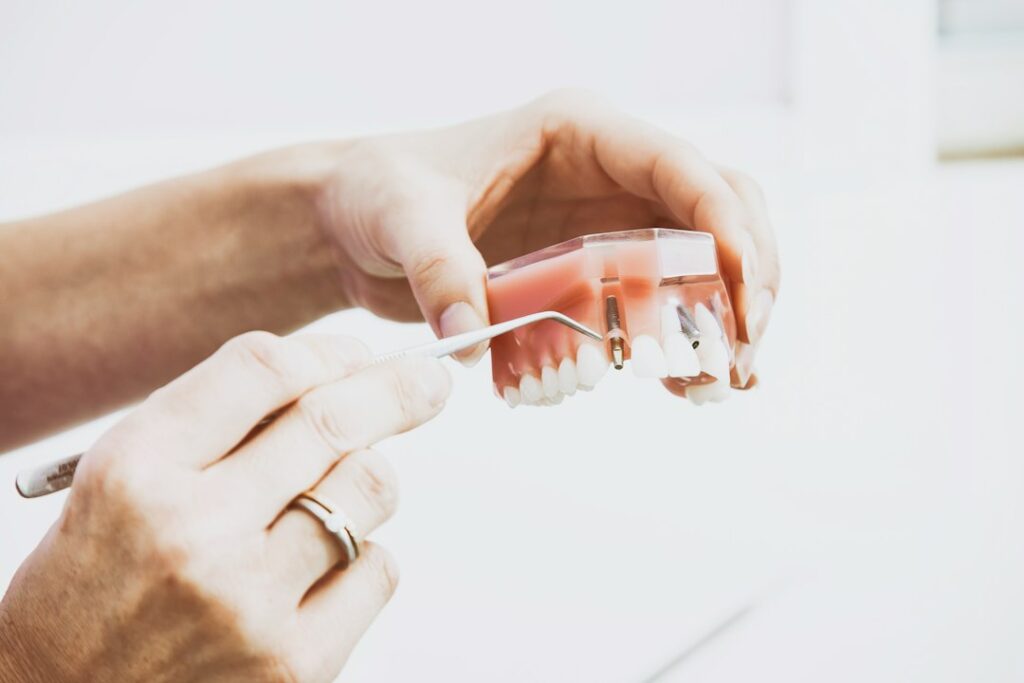
Losing a tooth does not automatically mean choosing a removable denture. Depending on the number of missing teeth, the condition of the surrounding teeth and bone, and overall health, replacement may be possible with a dental implant, a fixed bridge, a bonded bridge, or—in selected cases—careful monitoring without immediate replacement.
The right choice depends less on appearance alone than on chewing function, bite balance, gum health, jawbone support, maintenance needs, and long-term goals.
Can a missing tooth be replaced without a removable denture?
Yes. The main non-removable options are dental implants and fixed dental bridges. An implant replaces the missing tooth’s root with a small post placed in the jawbone. A bridge replaces the visible tooth and is supported by neighboring natural teeth or by implants.
Some people may also qualify for a resin-bonded bridge, sometimes called an adhesive bridge. This uses small supporting wings attached to nearby teeth and may be useful when only one front tooth is missing and the neighboring teeth are healthy.
A missing tooth can occasionally be left unreplaced, but that decision should be based on its location, the surrounding bite, and the risk of future movement or chewing problems.
How do dental implants replace missing teeth?
A dental implant replaces the root portion of a tooth. After the implant bonds with the jawbone, it can support a crown, bridge, or another fixed restoration.
For one missing tooth, the usual arrangement includes:
- An implant placed in the jawbone
- A connecting component called an abutment
- A custom crown that replaces the visible tooth
The major advantage is that the neighboring teeth generally do not need to be filed down to support the replacement. Implants can also help maintain stimulation in the jawbone, although they do not prevent every form of bone change after tooth loss.
Implant treatment may require several stages and healing periods. Bone volume, gum health, smoking, diabetes control, certain medications, and previous infection can affect suitability and timing. Some people need bone grafting before an implant can be placed.
Implants are not maintenance-free. Daily brushing, cleaning around the implant, and regular dental monitoring are needed because inflammation around an implant can damage the supporting tissues.
What is a fixed dental bridge?
A fixed bridge fills a gap by attaching an artificial tooth to one or more neighboring teeth. The supporting teeth are called abutments, and the replacement tooth is called a pontic.
A conventional bridge may be appropriate when the adjacent teeth already have large fillings, crowns, or other damage that would benefit from full coverage. The supporting teeth are prepared so the bridge can fit securely over them.
A bridge can restore chewing and help keep nearby teeth from drifting into the open space. It is usually completed more quickly than an implant because it does not require implant surgery or bone integration.
The tradeoff is that healthy neighboring teeth may need to be reshaped. Cleaning beneath the replacement tooth also requires specific techniques, such as floss threaders, interdental brushes, or water irrigation devices.
Could a bonded bridge work for one missing tooth?
A resin-bonded bridge may be considered for selected spaces, especially toward the front of the mouth. The replacement tooth is connected to thin wings that attach to the back surfaces of nearby teeth.
This option generally requires less alteration of natural tooth structure than a conventional bridge. It may also be completed with less invasive treatment.
However, bonded bridges can loosen, particularly when exposed to strong biting forces. They may not be suitable for a back tooth, a heavy bite, extensive tooth wear, or teeth with limited enamel for bonding. If the bridge comes loose, it may sometimes be rebonded, but repeated loosening can occur.
Is it safe to leave a missing tooth alone?
Sometimes, but not always. A missing back tooth may not need immediate replacement if chewing remains comfortable and the surrounding teeth are stable. Monitoring can be reasonable when the space does not affect speech, appearance, function, or bite balance.
Leaving a gap can also create problems. Nearby teeth may tip or drift, the opposing tooth may move farther into the space, and chewing forces may become concentrated on fewer teeth. These changes are not guaranteed, and they often develop gradually.
A tooth lost because of gum disease, infection, or trauma also raises questions about the health of the supporting bone and neighboring teeth. The cause of tooth loss matters when deciding whether observation is appropriate.
What if several teeth are missing?
Several missing teeth can sometimes be replaced with an implant-supported bridge. Instead of placing one implant for every missing tooth, strategically positioned implants may support a fixed row of replacement teeth.
This approach can provide a stable alternative to a removable appliance, but it requires careful evaluation of bone levels, gum health, bite forces, cleaning access, and the number and location of implants.
For people missing most or all teeth, fixed implant-supported restorations may be possible in some circumstances. They are more complex than replacing a single tooth and may involve surgical planning, temporary teeth, and a long-term cleaning routine.
How do local conditions affect tooth replacement decisions?

Seasonal conditions in Littleton can make comfort and maintenance especially noticeable. Cold, dry winter air may contribute to a dry-mouth sensation, while heated indoor air can make the mouth feel less comfortable during healing. Dry mouth also increases the risk of tooth decay around bridges and crowns.
People who travel from rural or spread-out areas for dental care may also need to consider the number of visits required. A bridge may involve fewer treatment stages, while implants commonly require healing time and more than one phase of care.
Winter weather can also affect transportation after oral surgery. Planning for soft foods, prescribed medications, and a reliable way home is practical, particularly when roads are icy or travel distances are longer.
What should be evaluated before choosing an option?
A thorough assessment usually considers:
- The number and location of missing teeth
- The condition of neighboring teeth
- Gum infection or active periodontal disease
- Available jawbone and gum tissue
- Bite force, clenching, or grinding
- Medical conditions and medications
- Smoking or nicotine use
- Ability to clean around the restoration
- Treatment time and the number of visits
- Long-term repair and replacement needs
Digital scans and dental X-rays may help assess bone, roots, infections, and the relationship between the upper and lower teeth. The least invasive option is not automatically the most durable, and the most complex option is not automatically the most appropriate.
What misconceptions should be avoided?
A common misconception is that implants are permanent in the sense that they can never develop problems. The implant itself may be durable, but the crown, bridge, gum tissue, and supporting bone still require care.
Another misconception is that a bridge is always weaker than an implant. A well-designed bridge can function successfully for many years, especially when the supporting teeth are strong and cleaning is consistent.
It is also incorrect to assume that every missing tooth must be replaced immediately. Some spaces can be monitored, while others are more likely to affect chewing, speech, tooth movement, or jaw comfort.
The most useful decision is the one that fits the person’s oral health, anatomy, daily habits, treatment tolerance, and ability to maintain the result over time.