

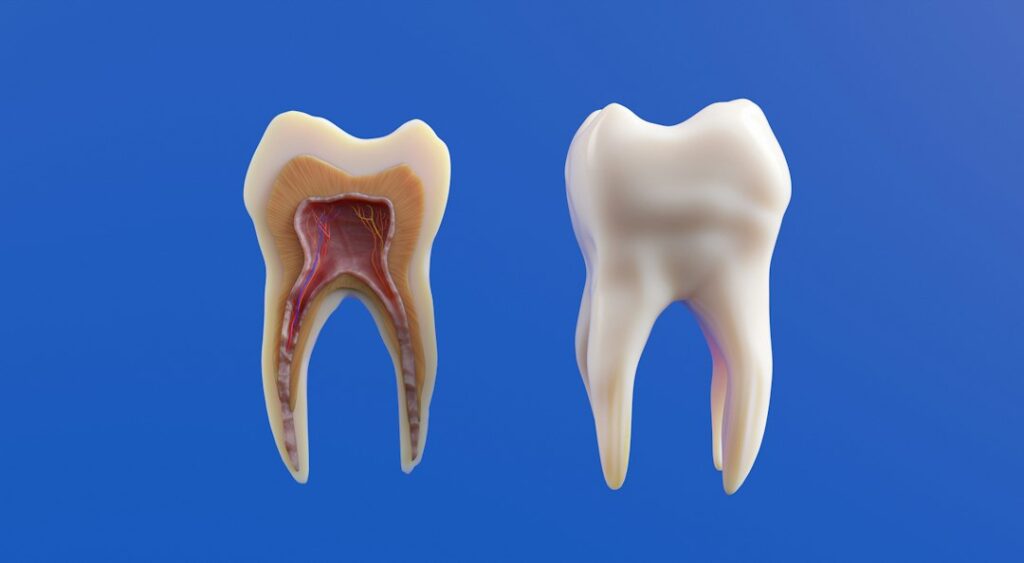
A chipped tooth is not always an emergency, but a crack can worsen quickly even when discomfort is mild. For residents of Littleton, NH, the right response depends on what part of the tooth is damaged, whether the inner nerve is affected, and whether the injury resulted from an accident, decay, grinding, or biting something hard.
Is a chipped tooth different from a cracked tooth?
Yes. A chip usually involves a small piece of enamel breaking away from the tooth’s surface. A crack is a line or fracture that may extend deeper into the tooth and can gradually spread.
Common types of damage include:
- Minor enamel chip: A small edge has broken off, often without pain.
- Fractured cusp: A raised section of a back tooth has broken, sometimes around an older filling.
- Cracked tooth: A fracture extends from the chewing surface toward the root, but the tooth remains in one piece.
- Split tooth: The crack has progressed far enough that the tooth has separated into sections.
- Root fracture: The damage begins in the root, sometimes after trauma or long-term stress.
A rough edge may be the only sign of a chip. Cracks may cause sharp pain when biting, discomfort when releasing a bite, or sensitivity to cold, heat, or sweet foods. Symptoms can come and go, which does not necessarily mean the problem is resolving.
What should happen immediately after a tooth breaks?
Rinse the mouth gently with warm water and remove any loose debris. If swelling is present, a cold compress held against the outside of the face may help reduce it.
If a piece of tooth has come off, keep it in a clean container with milk or saliva rather than allowing it to dry out. The fragment may not be reusable, but preserving it gives the dental team more information and may occasionally allow it to be bonded back into place.
Until the tooth is evaluated:
- Avoid chewing on the affected side.
- Choose softer foods and avoid hard, sticky, or very cold items.
- Do not file the tooth or attempt to glue the fragment back.
- Cover a sharp edge temporarily with dental wax or a small piece of sugar-free gum if it is cutting the cheek or tongue.
- Use over-the-counter pain medicine only as directed on the label and only if it is safe with existing medical conditions and medications.
Do not place aspirin directly on the tooth or gum. It can irritate or burn soft tissue.
When does a chipped or cracked tooth need urgent attention?
A small, painless chip may be suitable for a prompt but non-emergency dental visit. Urgent evaluation is more appropriate when the tooth is painful, loose, bleeding, visibly displaced, or broken below the gumline.
Seek immediate medical attention for:
- Severe swelling of the face, mouth, throat, or neck
- Trouble breathing or swallowing
- Heavy bleeding that does not stop with gentle pressure
- A serious injury to the jaw or face
- Loss of consciousness, vomiting, or double vision after an accident
A tooth that has been knocked out is a separate emergency. Handle it by the crown rather than the root, keep it moist, and seek dental care as quickly as possible. A knocked-out adult tooth has a better chance of being saved when treatment begins promptly.
In winter, falls on ice and injuries during outdoor activities can lead to dental fractures. Protective equipment, including a properly fitted mouthguard for contact sports, can reduce the risk of trauma.
How is a damaged tooth diagnosed?
A dental examination usually includes a review of the symptoms, inspection of the tooth, and testing for sensitivity or pain when biting. Dental imaging may be needed, although a crack does not always appear clearly on a standard X-ray.
The examination may also consider:
- Whether the tooth has an old filling or crown
- Signs of decay beneath or around a restoration
- The depth and direction of the crack
- The condition of the gum and supporting bone
- Whether the inner pulp, which contains nerves and blood vessels, is inflamed or infected
- Whether nighttime grinding or clenching is adding pressure

Pain that occurs mainly when releasing a bite can be a useful clue, but symptoms alone cannot determine whether a tooth can be saved.
What treatment options are available?
Treatment depends on how much healthy tooth remains and whether the nerve is involved.
Smoothing or bonding
A very small enamel chip may only need gentle smoothing. Tooth-colored bonding can rebuild a minor missing area and improve the shape of the tooth. This approach is conservative, but bonding can wear or chip again, particularly when used on a biting edge.
Filling or partial restoration
A small fracture in a back tooth may be repaired with a filling or a stronger partial restoration. This can restore function when the damage is limited and the remaining tooth structure is stable.
Crown or cuspal coverage
A larger fracture may require a crown or another restoration that covers and protects the weakened parts of the tooth. Coverage is often considered when a chewing cusp is missing, a large filling has fractured, or the tooth is at risk of splitting further.
Root canal treatment and restoration
If the crack has reached the pulp and caused lasting inflammation or infection, root canal treatment may be needed before the tooth is protected with a crown or similar restoration. Sensitivity that lingers after hot or cold exposure, spontaneous pain, or tenderness when biting can indicate deeper involvement, although these signs are not conclusive on their own.
Extraction and tooth replacement
A tooth may not be restorable if the fracture extends below the gumline, divides the tooth into separate segments, or involves a severely damaged root. In those situations, removal may be considered. Replacement options can include a bridge, removable appliance, or implant-supported restoration, depending on overall oral health, bone support, medical history, and personal circumstances.
Can a cracked tooth heal on its own?
No. Enamel and dentin do not repair a structural crack in the same way that skin heals. A minor surface craze line may remain stable and require little treatment, but a deeper crack can allow bacteria and pressure to reach vulnerable inner tissues.
The absence of pain does not prove that a cracked tooth is harmless. Some fractures cause only occasional sensitivity until the damage becomes more extensive.
Why do teeth chip or crack?
Common contributors include biting ice, hard candy, popcorn kernels, bones, or other rigid objects. Large fillings can leave less natural tooth structure to absorb chewing forces. Tooth decay weakens the internal structure, while clenching and grinding can repeatedly overload the enamel and cusps.
Age-related wear, uneven bite forces, and facial injuries also play a role. Seasonal changes in Littleton can affect routines and activities: winter sports, icy walking surfaces, and cold-weather habits may increase the chance of falls or accidental impacts, while dry indoor air can make some people more aware of mouth discomfort. The air itself does not crack healthy teeth, but environmental and behavioral factors may expose an existing weakness.
How can further damage be reduced?
Until the tooth is treated, avoid using it to bite hard foods or non-food objects. Long-term prevention may include treating decay, replacing failing restorations, addressing grinding, and using a protective mouthguard when appropriate.
A chipped or cracked tooth should be assessed based on its depth, symptoms, and cause rather than appearance alone. Early evaluation can distinguish a minor surface defect from a fracture that threatens the tooth’s nerve or root.